
The Outside-In Trap
I spent a decade in a unique position — hearing over 10,000 whispered requests for transformation.
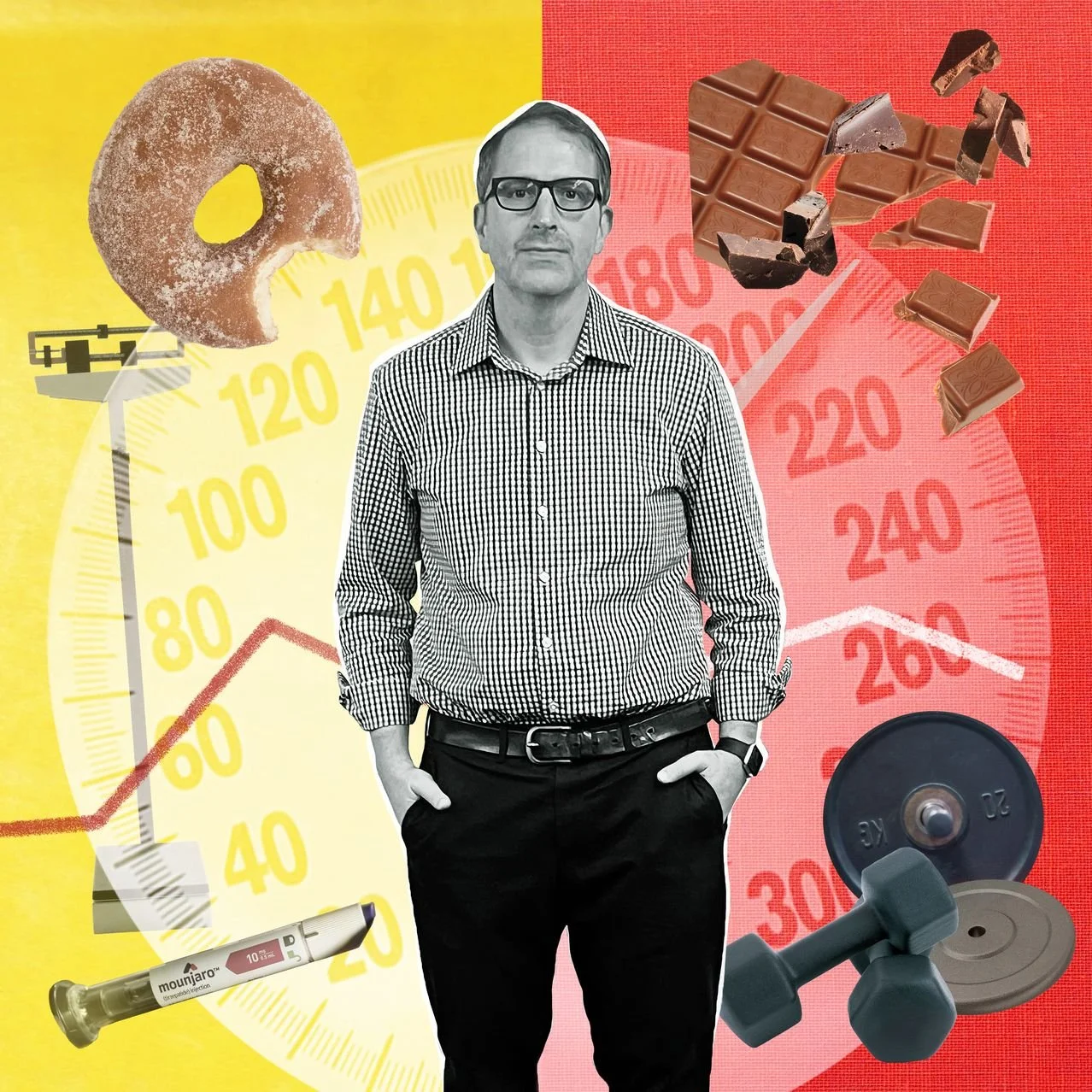
Image from Wall Street Journal
In spin studios and training rooms, people would pull me aside to ask:
"How do I fix this thing about myself?"
Recently I read Bradley Olsen's WSJ piece about his experience with weight-loss medication. His central question - "What next?" - stopped me in my tracks. Not because it was profound, but because it was so familiar.
I heard the same echo of my own relationship with alcohol. That nightly mirror moment: "Never again." Then watching helplessly as our hands develop a power all their own the next day.
Here's what fascinates me: These aren't actually stories about weight or drinking or whatever your particular flavor of struggle might be. They're stories about trying to solve internal friction with external solutions.
We think if we just find the right diet, medication, workout plan, or strategy, we'll finally feel okay being ourselves. Like trying to fix a mechanical problem by repainting the car.
The real gear shift happens when we realize something counterintuitive: Acceptance isn't the reward for change. It's the foundation for it. The people I see making lasting changes aren't the ones who've mastered willpower or found the perfect system. They're the ones who've stopped treating self-acceptance like a performance bonus.
They can say "This is exactly who I'm meant to be... today" without adding "once I fix this thing about myself."
That's not a very evidence-based solution. It won't satisfy the data-driven crowd. But I've watched it work too many times to ignore.
Here's what I keep seeing: The moment we stop trying to grind our way to worthiness is often the exact moment we find our unused gears. Like discovering you had another gear on your bike that you never knew was there - not because you weren't strong enough, but because you were pushing too hard to notice it.
Feeling like you're grinding against invisible gears? Like you're pushing harder but moving slower?
Here's what I know: The solution usually isn't about adding more force. It's about accessing the gears you already have but rarely use.
Inquire within...
Onward!
Bryoncé